
The Ultimate Guide to Tattoo Balm: Benefits, Ingredients and Best Uses
What Is Tattoo Balm?
Tattoo balm is a skincare product made specifically for healing and maintaining tattooed skin. It’s not just a fancy moisturiser — the formulation is actually different in a few meaningful ways, and those differences matter when your skin is in the middle of repairing itself.
Most balms are built around a base of natural oils and waxes — things like shea butter, beeswax, and coconut oil — that work together to hydrate the skin and form a light protective barrier over the tattooed area. Some also include soothing botanicals like calendula or chamomile to help with redness and irritation during the early healing days.
The texture is also notably different from a standard lotion. Balms are thicker and more emollient, which means they stay on the skin longer and lock in moisture more effectively. During the first week or two of healing when the skin is dry and sensitive, that extra staying power makes a real difference.
Why Bother With Balm?
Fresh tattoos need moisture to heal well — but they also need protection. A good balm does both at once.
The hydration side of things is straightforward: keeping the skin from drying out reduces itching, minimises scabbing, and helps the ink settle evenly. Dry, cracked skin during healing is one of the more common causes of patchy or faded results.
The protection side is equally important. Balms create a breathable barrier over the tattooed area that shields it from bacteria and environmental irritants while the skin is still vulnerable. Think of it as giving the skin a controlled, clean environment to recover in.
And it’s not just for fresh tattoos. Regular balm use on healed tattoos helps keep the skin supple and the ink looking vivid — sun exposure and general dryness are the two biggest culprits when older tattoos start to look dull, and a good balm helps counteract both.
Balm vs. Cream — What’s the Difference?
It’s a fair question, and the answer comes down to how the products are made.
Most standard creams and lotions have water as a primary ingredient. That’s not necessarily a problem for general skincare, but it does mean they evaporate relatively quickly and need more frequent reapplication.
Balms are water-free. They’re built almost entirely from oils and waxes, which means they don’t evaporate — they sit on the skin and keep working. That makes them better at locking in moisture over a longer period, which is exactly what healing skin needs.
The thickness also creates a more effective barrier. Balms are occlusive — they slow down water loss through the skin, which keeps the tattooed area hydrated between applications. Most people find they need to reapply less often compared to lighter creams, which is a practical upside on top of the performance benefits.
One more thing worth noting: many standard creams contain fragrances or synthetic additives that can irritate sensitive, healing skin. Quality tattoo balms tend to stick to natural, skin-friendly ingredients — which matters a lot when you’re dealing with an area that’s already been through a lot.
Ingredients Worth Looking For
Natural oils — Coconut oil, jojoba oil, and sunflower oil all show up regularly in good balms for good reason. Coconut oil has antimicrobial properties that can help protect against infection. Jojoba is structurally similar to the skin’s natural oils, so it absorbs well without clogging pores. Sunflower oil is lightweight and rich in vitamin E, making it a solid all-rounder for healing skin.
Protective waxes — Beeswax and candelilla wax (a plant-based alternative) give balms their structure and help form that protective layer over the skin. They also allow the skin to breathe, which is important — you don’t want to suffocate healing skin, just shield it.
Squalane — A lightweight emollient that’s well-tolerated by most skin types. It softens and conditions without feeling heavy, and it’s good at improving moisture retention.
Vitamin E (Tocopherol) — A staple in tattoo balms. It’s an antioxidant that supports skin repair and helps protect against environmental damage while the tattoo is healing.
Botanical extracts — Aloe vera, calendula, and chamomile are commonly included for their soothing and anti-inflammatory properties. If your skin tends to react during healing, these can make the process a lot more comfortable.
Ingredients Worth Avoiding
The short version: look for products that keep the ingredient list clean and natural. Artificial fragrances, alcohol, and harsh preservatives can all irritate healing skin and slow things down. If you can’t pronounce something and it’s not a recognised botanical or oil, it’s worth a quick look before committing.
How to Apply It
Clean hands first — always. You’re touching an area of compromised skin, so this one isn’t negotiable.
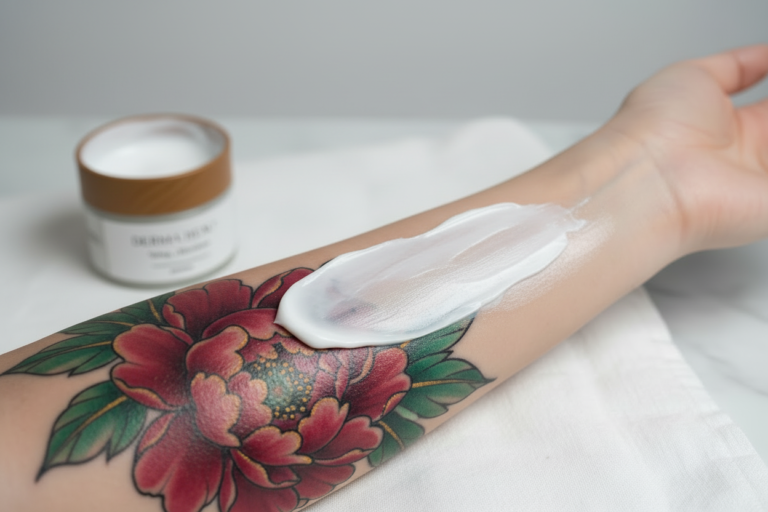
Apply a small amount (genuinely small — pea-sized is the right mental image) and work it gently across the tattooed area with your fingertips. You’re aiming for a thin, even layer that covers the tattoo without sitting heavy on the skin.
Two to three times a day is the standard recommendation for the first couple of weeks, and then as needed once the tattoo is healed. The goal is hydration, not saturation — more isn’t better here.
Common Questions
When should I start using balm? Most artists will tell you to wait 24–48 hours before applying balm. Follow whatever guidance your artist gives you — they know how your specific tattoo was done.
Can I use it on older tattoos? Absolutely. Regular balm use is one of the better things you can do for healed tattoos. It keeps the skin healthy and the ink looking sharp.
What if my skin reacts to it? Stop using it. Figure out which ingredient might be the culprit — fragrance is the usual suspect — and try a simpler formulation. If the reaction is significant or doesn’t clear up, see a doctor.
Final Thoughts
Balm isn’t complicated, but it is worth choosing carefully. A good one supports healing, protects the tattoo, and makes the whole experience more comfortable. A bad one — full of fragrance and synthetic fillers — can do the opposite.
Stick to clean ingredients, apply it consistently in thin layers, and let the skin do the rest.
If you’re after our recommended tattoo balm, Hold Fast Tattoo Balm is the one.
Latest posts
- The Complete Tattoo Aftercare Guide: Healing Timeline, Mistakes, Myths, and Expert Tips
- 10 Tattoo Aftercare Myths That Could Ruin Your Ink
- 15 Tattoo Aftercare Mistakes That Ruin Tattoos (And How to Avoid Them)
- Is My Tattoo Healing Properly? Signs of a Healthy Healing Tattoo
- Can You Exercise After Getting a Tattoo?
looking for tattoo aftercare?
Disclaimer
The information provided on this website is for educational and informational purposes only. While we aim to provide accurate and helpful guidance about tattoo aftercare and healing, the content on this site should not be considered medical advice.
Tattoo healing can vary depending on individual skin types, health conditions, and the specific tattoo procedure. Always follow the aftercare instructions provided by your professional tattoo artist and consult a qualified medical professional if you experience signs of infection, allergic reactions, or unusual healing.
TattooAftercare.Studio and its authors are not responsible for any adverse reactions, complications, or outcomes resulting from the use of information provided on this website. By using this site, you acknowledge that you are responsible for your own tattoo care decisions.